

This year, it was Matej Mináč’s film Nicky’s Family. Featured on Scientology Network’s Documentary Showcase, the film reminds you that, even amid incomprehensible evil, goodness can still assert itself, like a blade of grass bursting through concrete.
Mináč tells the incredible story of how, at the dawn of the Second World War, a young British stockbroker by the name of Nicholas Winton saved the lives of hundreds of children.
Of the 15,000 Czech children detained in the Theresienstadt concentration camp in Czechoslovakia, less than 100 survived.
In 1938, Jewish families in Czechoslovakia were in an impossible situation. With the Nazi menace looming, they were desperate to get their sons and daughters to safety.
That Winton, a young British stockbroker, had expressed an interest in helping them was enough to create a flood of concerned parents coming his way. So he quickly assembled a team of volunteers, opening an office in Prague and operating from his house in London to receive and log the Czech parents and their children in a scrapbook, and to recruit and interview prospective British foster parents for those children, who would be imminent refugees.
Winton’s scrapbook grew to feature the snapshots and details of page after page of Czech children, provided by their parents. And as the situation worsened between 1938 and 1939, the scrapbook swelled in size into a grim record of so many endangered lives.
Prospective British foster parents pored over photos, choosing the child they would welcome. Then passports and travel documents—often makeshift to bypass processing delays—were drawn up, and train tickets were purchased for the journey that would take the children from their homes, through Germany, into Holland and across the Channel.
With the arrangements in place, the final scenes unfolded on train platforms. Czech parents kissed their sons and daughters goodbye, knowing they were likely saying farewell forever, and watched their priceless cargo carried into a foreign land hundreds of miles away—into the arms of strangers.
Winton and his handful of volunteers raced against time, countering red tape, bureaucratic delays, lack of funding and the suspicion of Nazi officials whose regime was creeping inexorably across Czechoslovakia from the Sudetenland.
The final train, September 1, 1939, never left the station. It was prepared to carry 250 more children to join the nearly 700 already in safety.
But it was not to be.
The war began that day.
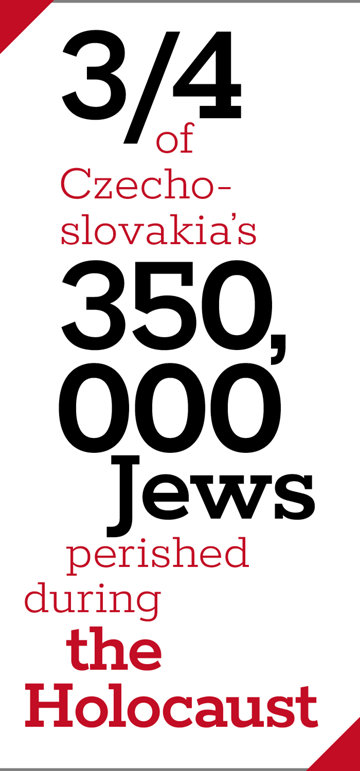
Over the ensuing six years, the Final Solution, applied to Czechoslovakia, very nearly worked. Nearly three-quarters of the Jewish population—more than 260,000—perished.
Of the 15,000 Czech children detained in the Theresienstadt concentration camp in Czechoslovakia, less than 100 survived.
Years passed. The children Nicholas Winton rescued lived their lives and raised their families, never knowing that their benefactor had been a 29-year-old London stockbroker who risked his career to save them because it was the right thing to do, while asking nothing in return.
Then one day in 1988, Winton’s wife, Grete, opened a trunk in the attic and found the scrapbook. Leafing through it, she discovered photographs of the many children, along with lists of names and birthdates.
Winton, a hero who had saved so many children from certain death, had kept the story to himself for nearly 50 years—believing it was a minor chapter of history, of interest to no one.
He was wrong.
As one survivor put it after seeing his name in the scrapbook, it was “the biggest shock of my life. I couldn’t speak, I couldn’t breathe. I had goose bumps all over my arms. All these years! Fifty years!”
Nicholas Winton lived to the age of 106, enough time to be hugged, kissed and thanked repeatedly by the grown men and women who discovered so much later in life the miracle that he had wrought in giving them the full lives that the Holocaust would have stolen. Together, with their sons, daughters and grandchildren, they now form a community of more than 5,000 strong who call themselves “Nicky’s family.”
Winton’s selflessness spawned more than just gratitude among that “family.”
“A lot of us have a feeling,” said one, “that we have to somehow repay Winton for all that he did. We do it by doing work which … helps other people.”
One survivor, for example, volunteered at a children’s hospital. Another worked at a soup kitchen. A third, formerly a ballistic missiles researcher, changed his entire career to become a pastor after discovering his personal debt to Winton.
Nicholas Winton’s legacy didn’t just extend beyond borders; it also spread across generations.
“Nicky Winton saved Grandma and he didn’t have to,” said one survivor’s grandchild. “And that made me want to help people, too.” The little girl described how, upon learning that children with cancer were losing their hair, “I cut 10 inches off my hair and they made it into a wig for one kid who had cancer.”
The phenomenon has been dubbed the “Winton virus of good.”
One project, inspired by Winton’s example, involved a couple who wanted to help the starving and ill children of Cambodia. Told that doing so would be a financial and logistical nightmare, they remembered Winton’s words—“Everything is possible if it’s fundamentally reasonable”—and persisted. To date, they have saved and treated over 5,000 children.
“I never thought what I did 70 years ago was going to have such a big impact,” Winton said.
But thanks to his legacy, the miracle continues to unfold—each small, stubborn act of kindness pushing its way through the concrete of suppression and hate like a single blade of grass.
Nicholas Winton’s legacy began with an old, forgotten scrapbook. But it has spawned a movement thousands strong.
Winton was under no obligation to act. In his 29 years before the war, he’d given no hint of the greatness within him. He could have lived an ordinary, comfortable life, and no one would have faulted him for it.
But by simply seeing the need to act and doing so, he did more than become a hero.
He created generations of them.