

Certainly, they need to be.
Containing kratom, Feel Free has faced court losses and a growing wave of user complaints alleging the so-called “herbal supplement” is highly addictive and, in larger doses, its psychoactive ingredient can trigger seizures, high blood pressure, vomiting, liver damage and hallucinations.
In September 2024, Botanic Tonics, owner of Feel Free, was forced into an $8.75 million class action settlement over claims it failed to disclose the amount of kratom in each two-ounce bottle and neglected to warn users about the risks posed by high-dose consumption.
A federal court recently denied Botanic Tonics’ motion to have returned to them more than 225,000 bottles and over a ton of kratom products seized by authorities—all poised for sale, valued at roughly $3 million.
Consider how many users’ lives that much kratom could destroy.
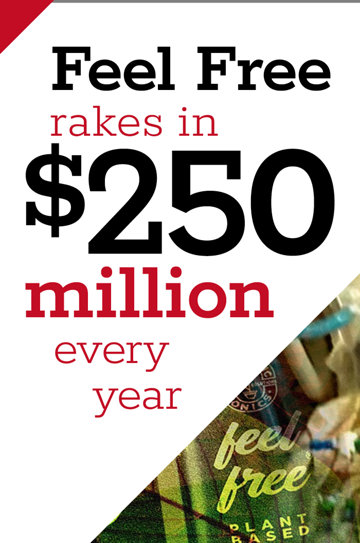
And yet, Feel Free is still sold in 30,000 locations nationwide, generating more than $250 million in annual sales.
In court filings, federal authorities warned that “serious safety concerns exist regarding the effect of kratom on multiple organ systems,” leading to “a number of negative health impacts, including respiratory depression, vomiting, nervousness, weight loss and constipation.”
The government further alleges that consumption of kratom has “been linked to neurologic, analgesic and sedative effects, addiction and liver toxicity.”
“Shouldn’t there be a warning on the damn bottle?”
In response to complaints, Botanic Tonics has whined that “false and misleading claims are being made about Feel Free on social media and are being perpetuated on news outlets.” They claim that, though they have sold over 129.7 million servings of Feel Free, “we have received fewer than 1,000 consumer adverse event complaints total across all categories, with zero complaints involving severe addiction.”
This, they said, is “an exceptionally low complaint rate.”
Really? Just how many hopelessly addicted people and how many destroyed lives are too many?
Online forums and support groups are filled with accounts from people who never expected a “herbal supplement” to consume their health, finances and lives.
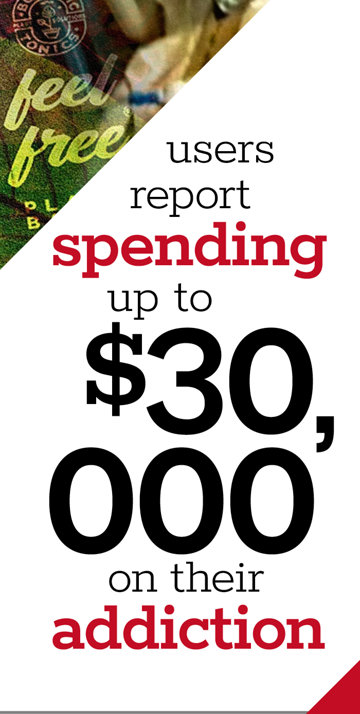
John, a former addict, went from sampling Feel Free to drinking almost a case a day, spending some $30,000 on his new addiction. He sold everything he had to feed his craving. Then, he resorted to stealing.
Eventually, he developed tremors, sweating, difficulty breathing and began frothing at the mouth. He ended up in a hospital on a ventilator. “They thought I was going to die,” he said.
Drew Barrett was heavily addicted. He would drink up to 12 bottles per day and was spending about $2,000 a month to get his fix.
“The stuff is poison,” he said.
Not even fame will protect you from kratom’s clutches. Comedian Jamie Lissow also got hooked.
“I started drinking these little bottles,” he said. “They sell them at gas stations.… I was touring in Florida and I would buy them at 7-Elevens.”
Seduced by the opioid-like euphoria the product induces, he was soon swilling three to four Feel Free bottles per day. “I thought I was going to die,” he said.
“Shouldn’t there be a warning on the damn bottle?… You should at least know what you’re getting into.”
Lissow ended up in outpatient addiction care. Finally away from it for months, he said he is now “passionate” about getting the word out on the dangers of kratom and Feel Free.
One anonymous user posted on Reddit in desperation: “Can you guys please give me tips, advice, motivation and words of encouragement to quit cold turkey? All my money is spent on this s—t. I’m in debt, maxed out my credit cards and making the minimum payments. My credit score dropped from 800 to 500. I need to stop but scared, man.”
So if the stuff is so destructive, why is it allowed to be sold?
Alabama, Arkansas, Indiana, Louisiana, Rhode Island, Vermont and Wisconsin have banned kratom sales, but on the federal level, it’s a disturbingly different story.
In 2016, the DEA planned to classify kratom as an illegal Schedule I drug, but gave up after kratom supporters, members of Congress and others mounted a massive opposition campaign.
Bills offered in the Senate and House were designed to “protect access to kratom” and limit the secretary of Health and Human Services from banning the substance or taking other regulatory actions.
When a substance requires lawsuits, seizures and hospitalizations to expose its risks, it has already failed any reasonable standard of consumer safety.
Kratom-laced products like Feel Free do not belong on store shelves. They belong in the regulatory crosshairs—and out of circulation entirely.