

That truth might be uncomfortable to the powerful. It might shine the light on a wrong in order to right it. It might dismay as much as it inspires. But the one constant is that journalism is never silent.
Though America’s government may change every four years, journalism reigns forever.
Nowhere is this collapse of credibility more visible—or more corrosive—than when it comes to religion.
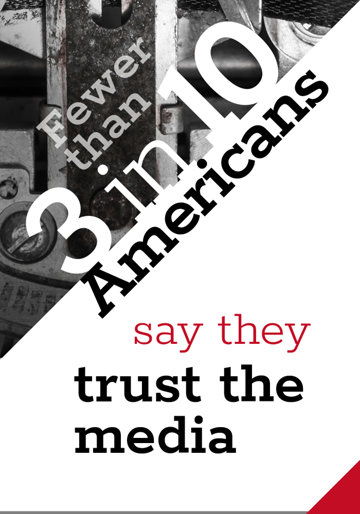
But confidence in that reign has fallen to historic lows, with fewer than three in 10 Americans saying they trust media to report the news fully, fairly and accurately.
Nowhere is this collapse of credibility more visible—or more corrosive—than when it comes to religion.
Too often unwilling (or too lazy) to educate themselves on the faiths they purport to cover, journalists bury the facts beneath stereotypes, misrepresentation and an obsession with scandal and conflict, according to the majority of US citizens. As one anchor observed, “in the overwhelming majority of newsrooms in America there is an appalling ignorance of religion and faith.”
Journalism’s crisis of confidence has exacted a cruel price: a steady procession of glossies, tabloids, dailies and sundry internet platforms to the graveyards of bankruptcy and oblivion. Few have emerged unscathed. Even once-dominant media brands like Time, NBC News, The Washington Post and Condé Nast have been forced to resort to mass layoffs as audiences and revenue flee.
And with the public fed up with lies, slop and distortion, we find ourselves in the winter of our journalistic discontent.
But as the echoes of New Year’s toasts fade and we stir from our collective hangover, it’s as good a time as any to suggest a pathway out.
And so, as a public service to the journalist who, like the rest of us, toils long hours for his daily bread, here are the resolutions we proffer for the media—to improve things for us all:
I resolve to respect the truth and the public’s right to know it.
I resolve never to facilitate—through mockery, bias or slanted reporting—discrimination against or disrespect of any race, sex, language, physical disability, religion or demographic group.
I resolve to educate myself on the basic beliefs and practices of any religion I cover, relying first and foremost on that religion’s own scriptures and teachings.
I resolve to treat all religions and their members with the same respect I would expect others to demonstrate toward my own.
And lastly:
I resolve to take full responsibility for what I write and publish.
With these resolutions honestly and earnestly followed, the ship of journalism in the 21st century may yet steer clear of the rocks. And, just as it takes more than a promise to restore trust, media’s road back to regaining its public will not be short. Nevertheless, it’s not too late to start now, at the dawn of the year.
Then, when we meet again at this time next year, we’ll raise a glass to the need for only one further resolution: I resolve to keep up the good work.