


That stark contradiction is now drawing scrutiny in Washington—where, on March 26, a congressional roundtable convened by Representative Glenn Grothman set out to investigate why expanded access to treatment hasn’t produced better outcomes.
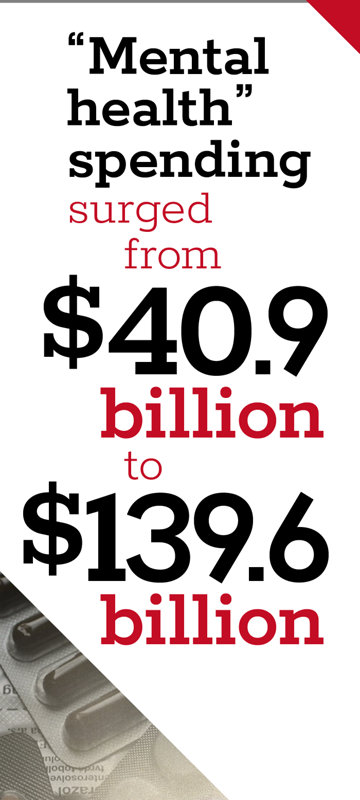
Over the past two decades, the number of adults receiving mental health treatment rose from 27 million to nearly 60 million, while spending on mental health and substance use disorders climbed from $40.9 billion to $139.6 billion, Grothman explained. Among young people, antidepressant prescriptions have surged more than 63 percent in recent years, with 221 million prescriptions dispensed to 18 million individuals ages 12 to 25.
Investigations across multiple states have revealed schemes involving fraudulent billing, kickbacks and fabricated treatment services, with losses reaching into the billions.
Grothman pointed to the alarming disconnect, noting that “outcomes are moving in the wrong direction,” with depression and suicide rates rising and fewer Americans describing their mental health as “excellent” or “good,” in spite of all that has been prescribed, funded and expanded under the banner of modern psychiatric care.
Participants at the roundtable built on that warning, pointing to a concern now taking hold across policy circles, clinical settings, patient advocacy groups and increasingly among the general public: that the current psychiatric system is driving a cycle of harm that is now impossible to ignore, fueled by dangerous psychotropic drugs, coercive treatment, and the pathologizing of ordinary behavior and distress through stigmatizing labels.
Roundtable experts—who ranged from academic researchers to clinicians to victims of psychiatric abuse—also described a system that expands diagnoses and leaves more people outside the workforce, with those carrying psychiatric labels now accounting for more than a third of Social Security Disability Insurance recipients, while taxpayers absorb the cost.
That pattern extends to the growing use of psychiatric drugs among children. In 2025, the White House’s “Make America Healthy Again” report warned that rising use of psychotropic drugs among children—including antidepressants, stimulants and antipsychotics—is driving an increase in long-term health problems. The report further pointed to the widespread prescribing of these drugs without clear evidence of long-term benefit, raising the risk of side effects and prolonged dependence.
At the same time, questions are mounting over federal mental health research spending. Despite decades of investment totaling tens of billions of dollars, outcomes have worsened by several key measures. Even former National Institute of Mental Health Director Thomas Insel, who led the agency for 13 years, acknowledged the gap, admitting that research efforts—including those he oversaw—have not “moved the needle in reducing suicide … hospitalizations [or] improving recovery for the tens of millions of people who have mental illness.”
Meanwhile, psychiatric drugs have been linked to a range of adverse effects, including neurological problems, disruptions in hormonal function, and neuroleptic malignant syndrome—a life-threatening reaction to antipsychotics marked by high fever and extreme muscle rigidity. Studies have also shown that psychiatric drugs can increase the risk of suicide and homicide.
Alongside these risks is another systemic failure: rampant fraud within the behavioral health sector. Investigations across multiple states have revealed schemes involving fraudulent billing, kickbacks and fabricated treatment services, with losses reaching into the billions. In one recent case, a major Minneapolis-based provider agreed to an $18.5 million settlement over allegations it lured patients with housing incentives while double-billing Medicaid for services. Behavioral health providers have also billed for care never delivered or exploited vulnerable populations to maximize reimbursement.
Against that backdrop, participants at the roundtable called for closer scrutiny of federal research spending and stricter oversight of billing practices in the behavioral health sector.
The message is clear: Public tolerance is eroding. More Americans are questioning a system linked to worsening outcomes, psychiatric harm and recurring fraud scandals. Those concerns have now unmistakably reached Capitol Hill.
The real test now is whether that recognition leads to accountability—or ends, once again, with warnings ignored.