

Why? Simple: Antidepressants are hugely profitable to the pharmaceutical industry and to psychiatrists, who prescribe them no matter what horrors of homicide and suicide follow in their wake.
Psychiatrists don’t like to acknowledge that the drugs they prescribe are the source of bloodshed, claiming instead that it must have been a “pre-existing mental illness” that caused a patient to kill himself or, worse, to unleash a mass killing spree on many innocent victims.
“It only took six days for the drug reaction to kick in and be so violent that he would commit suicide in that horrific way.”
But a new lawsuit filed in Massachusetts, in a case that springs from what may very well be the most terrifying nightmare anyone ever endured, threatens to rip the lid off the deception of mental health “professionals” and psychiatric drug peddlers, and expose to the world the heartbreaking havoc that antidepressants and sedatives wreak in our country and across the world.
Lindsay Clancy, a registered nurse and mother of three young children, began experiencing anxiety about returning to work after the birth of her third child in 2022.
She sought help from psychiatrist Jennifer Tufts but was soon plunged into the dark and deadly world of psychiatric drugs.
Over the next four months, she was dosed heavily with a panoply of drugs, including the antidepressants sertraline (Zoloft), trazodone (Desyrel), fluoxetine (Prozac) and mirtazapine (Remeron); the sedative zolpidem (Ambien); the benzodiazepines clonazepam (Klonopin) and diazepam (Valium); the antipsychotic quetiapine fumarate (Seroquel); and the mood stabilizer lamotrigine (Lamictal).
Clancy’s mental state grew worse and worse, as she sank into sleeplessness, anxiety, suicidal thoughts, crying, mental fog and paranoia. She told her psychiatric nurse practitioner, Rebecca H. Jollotta, that she was “feeling afraid as if something awful might happen”—and, horribly, it did.
On January 24, 2023, Clancy murdered all three of her children, tried to slash her own wrists and throat, and then jumped from a 20-foot-high second-floor window and ended up paralyzed from the waist down with traumatic spinal injuries.
Her children, Cora, 5, Dawson, 3, and Callan, just 8 months old, had been strangled to death with exercise bands before their mother tried, and failed, to take her own life. Her husband returned home from a brief shopping trip to find a devastating calamity awaiting him.
Patrick has filed a lawsuit against Tufts and Jollotta, as well as Aster Mental Health, Inc., a private practice providing outpatient mental health services, along with South Shore Health System Inc., stating that their “abject failure to appropriately monitor Lindsay resulted in Lindsay’s mental health deteriorating to the point of suicidal ideation and requiring inpatient care.”
The suit further states, “If defendants had not acted negligently and rather had provided adequate care, it is more likely than not that Patrick and Lindsay’s children would still be alive today.”
Patrick and his attorneys are demanding a trial by jury.
Meanwhile, Lindsay is being held at Tewksbury State Hospital and is scheduled to face murder charges in July.
The deadly and tragic trail of psychiatric drugs is portrayed in a stunning new documentary, Prescription for Violence: Psychiatry’s Deadly Side Effects, by the mental health watchdog Citizens Commission on Human Rights (CCHR).
The film traces the role such drugs have played in the acts of violence of mass murderers like that of Stephen Paddock, who, in October 2017, killed 58 people and himself, and injured about 867 in the Mandalay Bay massacre in Las Vegas. Paddock was taking the benzodiazepine Valium, which is known to cause suicidal ideation.
Again and again, the horrors of mass murders and serial killings perpetrated on innocent Americans have been linked directly to antidepressants, antipsychotics, benzodiazepines and other psychiatric drugs.
Nikolas Cruz, who killed 17 people in Parkland, Florida, had been prescribed Risperdal, Focalin and Clonidine.
Ivan Lopez-Lopez killed three and injured 14 at Fort Hood, Texas, in 2014 while being prescribed the antidepressants Wellbutrin and Celexa, then shot himself.
Eric Harris, one of the two shooters who killed 12 students and a teacher at Columbine High School in 1999, was taking the antidepressant Luvox at the time.
And if they don’t kill others, they often kill themselves.
Stewart Dolin, a successful attorney in Chicago, began taking a generic version of Paxil, an SSRI antidepressant, to help with his anxiety. Just six days later, he stepped off a subway platform into the path of a speeding train.
“This is a guy who had no business committing suicide,” the family’s attorney, R. Brent Wisner, said. “He had the best years of his life ahead of him. It only took six days for the drug reaction to kick in and be so violent that he would commit suicide in that horrific way.”
In Wyoming in 2025, Tranyelle Harshman, 32, shot her four daughters and committed suicide while taking mind-altering ketamine and the anti-anxiety drug clonazepam. Her mother has filed a wrongful death lawsuit against Sage Psychiatry Services and Krista Blough, a registered nurse.
“In 86 percent of psychiatric office visits, prescriptions for psychotropic drugs like Prozac, Seroquel and Xanax are written.”
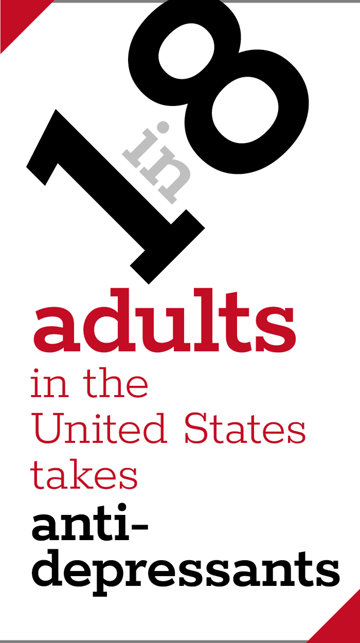
More than one in every eight adults in the US takes antidepressants, making the drugs enormously profitable for psychiatrists and the pharmaceutical industry.
“Random senseless violence has become a fact of life,” the documentary states. “A huge number of those responsible were under psychiatric treatment and either on, or withdrawing from, psychiatric drugs. And these drugs are being widely dispensed—250 million prescriptions in the US alone.”
Again and again, we ask why this deadly flood is washing over our country—what causes apparently normal people to lose control and commit murder or kill themselves?
There are just too many horrific instances of psychotropics playing a key role in causing murder, suicide, or both, for it all to be a coincidence.
Tennessee’s new 2025 law requires medical examiners to test for psychiatric drugs anyone suspected of killing four or more people.
Psychiatrists successfully opposed a similar new law, which was defeated in Wyoming, by claiming that, due to how widely these drugs are prescribed, mandatory reporting in suicides and violent deaths could stigmatize “treatment” or delay investigations.
But AbleChild, a group that opposes the psychiatric labeling and drugging of children, countered: “Blood is routinely taken … for illegal drugs. How much of a burden could it be to use that same blood to test for legal prescription psychiatric drugs?”
The truth is this: It is high time for the coverup to end. The cost in blood, pain and grief is far too much to bear.
“Psychiatrists have a drug problem,” says Diane Stein, President of CCHR Florida. “In 86 percent of psychiatric office visits, prescriptions for psychotropic drugs like Prozac, Seroquel and Xanax are written.”
The new Tennessee law is a revolutionary step toward exposing the role these drugs play in violent tragedies.
Psychiatrist Pamela Shervanick, disillusioned with her own field, asked, “How many people have to die and suffer before we shift this?”
Exactly.