

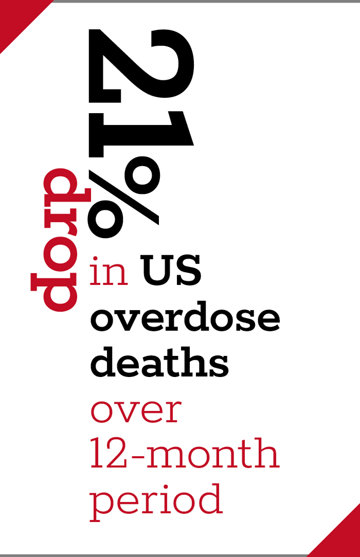
Federal data now show a broad easing of a crisis that once appeared inexorable: Provisional figures released by the Centers for Disease Control and Prevention estimate that roughly 73,000 people died from drug overdoses in the 12 months ending August 2025, down about 21 percent from the prior 12-month period. Deaths declined in 90 percent of all US states, a breadth of improvement rarely seen since the overdose epidemic began in the 1990s.
The significance of this moment lies not in a single cause but in a convergence of forces now pressing in the same direction—public health interventions, supply-side disruptions and expanded drug prevention and education—demonstrating that the tide can be turned when pressure is applied simultaneously from multiple fronts.
Once addiction takes hold, interventions become far more costly, and their outcomes uncertain.
“Overall, I think this continues to be encouraging, especially since we’re seeing declines almost across the nation,” said Brandon Marshall, a Brown University researcher who studies overdose trends.
Public health officials point to several developments already in motion. The overdose-reversing drug naloxone has become more widely available; access to rehabilitation resources has expanded in many states; and billions of dollars from opioid settlement funds have begun flowing into prevention and recovery programs. At the same time, fewer adolescents are initiating drug use, shrinking the pool of people at highest long-term risk.
But experts caution that emergency interventions alone cannot explain—or sustain—the current decline. Naloxone can interrupt a fatal moment, but doesn’t prevent drug use, restore health or reverse the social damage drugs inflict.
That gap points to a deeper explanation, because what distinguishes the current downturn from earlier, short-lived dips is the growing weight of upstream prevention—particularly education delivered before first exposure. That shift reframes the crisis not as an unsolvable pathology but as a preventable chain of decisions that can be interrupted early, consistently and at scale.
The change has been reinforced by a surge in public awareness. Over the same period as the sustained drop in overdose fatalities, the Foundation for a Drug-Free World, the world’s largest nongovernmental drug education and prevention campaign, significantly expanded distribution of its Truth About Drugs curriculum. Its free educator kit has now been requested by and placed in one-quarter of US middle and high schools, providing a full semester of lesson plans, documentary materials and printed resources for students aged 11 and older.
That package includes an educator’s guide, classroom assignments, the award-winning documentary The Truth About Drugs: Real People, Real Stories, booklet sets covering frequently abused substances and PSAs addressing common myths about drugs. All components are offered at no cost, either in print or via a digital educator app, reducing barriers for schools and community groups seeking prevention tools.
“The free educational packet, which includes a curriculum manual, video and individual pamphlets on each of the drugs, makes implementing the lessons into a health unit an easy task,” said a health and physical education coordinator.
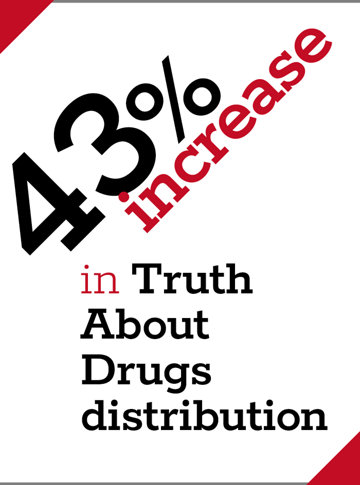
Distribution of printed educational materials also rose sharply during the period in which overdose deaths declined, with the number of Truth About Drugs booklets disseminated increasing by 43 percent during the same period.
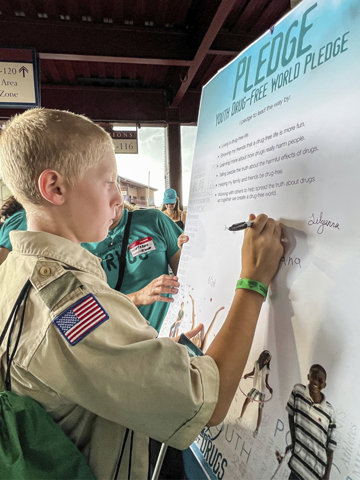
This pattern supports what prevention specialists have long maintained: Early, factual education lowers the likelihood of later drug initiation, particularly when delivered before experimentation begins.
It’s no speculative claim. Decades of prevention research show that youth who receive credible, non-sensationalized information about drugs—before peer pressure and curiosity converge—are significantly less likely to begin using. Once addiction takes hold, interventions become far more costly, and their outcomes uncertain.
Changes in the drug supply appear to have contributed as well. Research published in the journal Science suggests that regulatory actions taken in China beginning in 2023 may have reduced the availability of precursor chemicals used to manufacture illicit fentanyl, resulting in lower purity and diluted potency in parts of the drug market. The findings draw on government data and social media reports pointing to a temporary fentanyl “drought” in 2023.
A separate study published in the International Journal of Drug Policy examined economic conditions as another contributing factor. Researchers found that overdose deaths spiked after the distribution of federal COVID-19 stimulus payments in 2020 and 2021, suggesting that the end of those payments may have reduced disposable income available for illicit drugs.
Naloxone can save a life today. Education can save thousands tomorrow.
Taken together, experts stress that these explanations are cumulative rather than competing.
Yet temporary supply disruptions and economic shifts are, by definition, unstable. Drug markets adapt, chemical pathways reroute and financial conditions fluctuate. Prevention, by contrast, alters demand itself—reducing the number of people who ever enter the cycle of use, dependency and overdose.
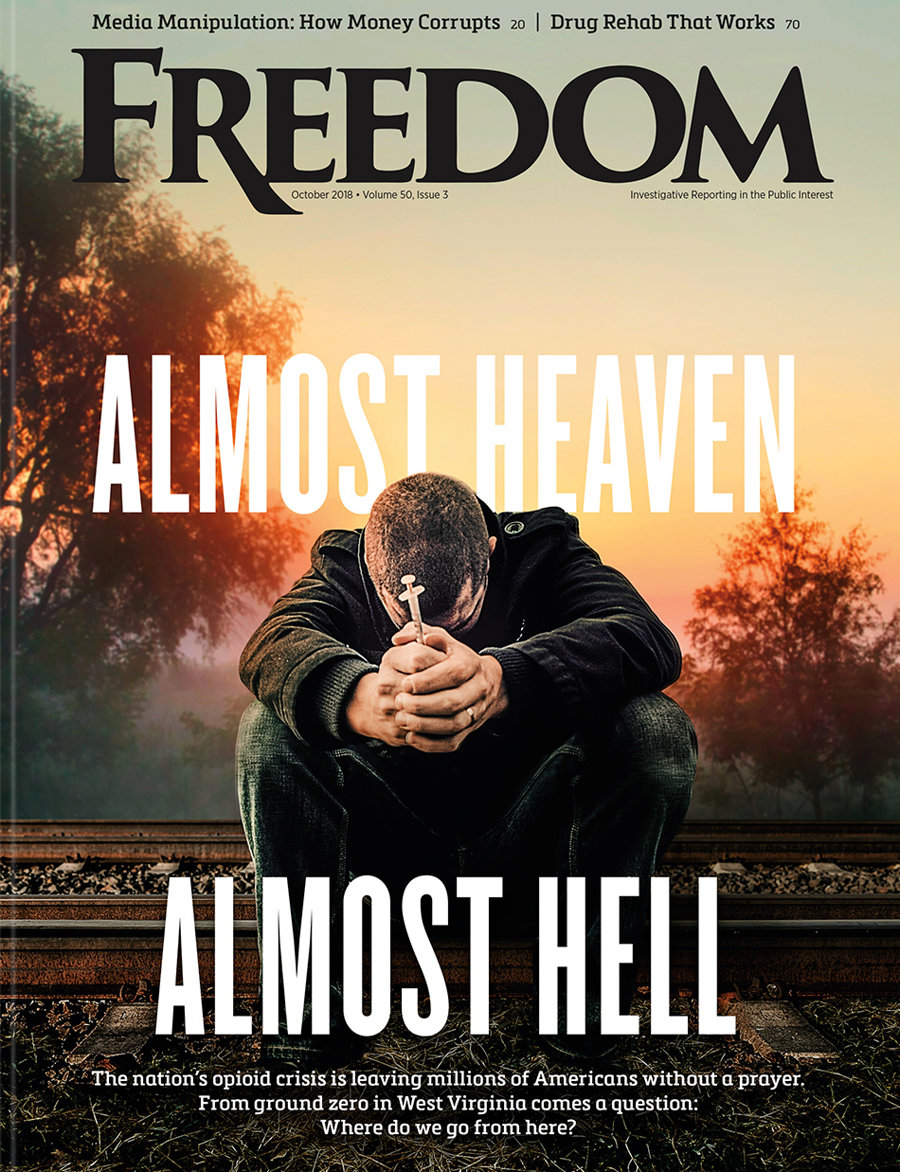
Against this backdrop, fentanyl remains the dominant threat. In 2023, two out of every three overdose deaths in the US involved synthetic opioids, primarily fentanyl, which is up to 50 times stronger than heroin and 100 times more potent than morphine. As Freedom reported in February 2025, fentanyl has been linked to the deaths of more than a quarter of a million Americans since 2018, including pop culture figures like Prince, Tom Petty and Coolio.
In response, Drug-Free World released The Truth About Fentanyl, a booklet dedicated exclusively to the drug now driving the epidemic. The publication explains how fentanyl is abused and why it’s lethal in even minute amounts, along with its street names, overdose warning signs, and both short- and long-term effects—condensed into a 10- to 15-minute read designed for broad public use, and geared toward youth.
The booklet joins a series of 15 Truth About Drugs publications, more than 170 million copies of which have been distributed in 20 languages across every nation of Earth. Sponsored by the Church of Scientology and spearheaded by Scientology ecclesiastical leader David Miscavige, the program frames prevention education as a global response to a crisis that transcends borders.
Taken together, these trends make one point clear: Overdose deaths fall when fewer people start using drugs in the first place. Education that reaches young people early, clearly and repeatedly reduces demand, blunts experimentation and shrinks the future pool of addicts.
The sustained decline through most of 2025 marks a historic turning point, showing that coordinated, long-term action can move the needle on America’s overdose epidemic—and that prevention is not ancillary but central. Naloxone can save a life today. Education can save thousands tomorrow.
For now, the numbers are trending downward. Whether they continue to do so will depend on decisions made in classrooms, clinics, legislatures and communities nationwide. If the current moment proves durable, it will be because prevention was treated not as an afterthought but as the first line of defense—long before prospective users ever take their first hit.