

In their no-holds-barred pursuit of the almighty dollar, the large corporations that own many such facilities are cutting costs and staff, compromising patient safety and often failing to report assaults to the police.
Those are the shocking findings published in a recent white paper by the mental health watchdog Citizens Commission on Human Rights (CCHR), which highlights that up to a staggering 45 percent of psychiatric inpatients report being victims of sexual violence while held in institutions.
That’s nearly half.
“They would get very physical. Like I’m talking elbows into the spine.”
“These are not isolated incidents,” CCHR International President Jan Eastgate said. “They reflect a regulatory vacuum in which abuse becomes predictable rather than exceptional.”
Nor, she said, is this “a problem of a few bad actors. It is a systemic psychiatric failure driven by a profit-based institutional model that has operated with minimal oversight and little accountability, and often at taxpayer expense.”
Despite countless media investigations and the groundbreaking 2024 US Senate report “Warehouses of Neglect”—which focused national attention on human rights violations inside psychiatric torture chambers for youth—little has been done to bring this outrageous cruelty to an end.
“When treatment does not resolve illness, facilities profit by extending confinement—not by achieving recovery,” CCHR states. “In for-profit settings, this creates incentives for understaffing, coercion and neglect. Abuse is not aberrational; it is structural.”
Examples of that abuse, sexual assault and even death inside psychiatric facilities are appallingly easy to come by.
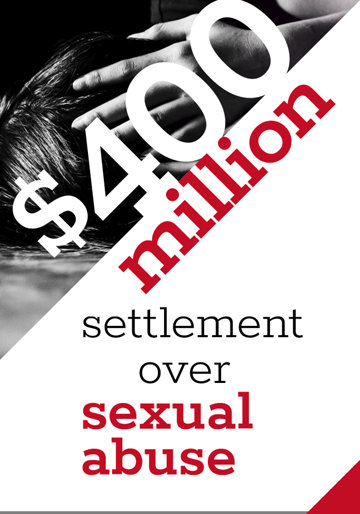
Acadia Healthcare’s Highland Ridge Hospital in Utah, for example, became known as the “rape hospital” after patients reported dozens of rapes and assaults, and the facility closed in 2024. That same year, Acadia was forced to pay out a hefty $400 million settlement over the sexual abuse of a minor at the shuttered Desert Hills of New Mexico, along with other related abuse cases at the same facility.
Timberline Knolls treatment center in Illinois was closed in 2025 after a lawsuit alleging that staff member Erick Hampton had sexually assaulted and raped a 24-year-old female patient multiple times.
Acadia, a large corporation with 262 facilities in 39 states, also saw its Detroit Behavioral Institute hit with a lawsuit alleging decades of sexual abuse of children.
In 2026, four former residents filed a federal civil complaint against Wilderness Training & Consulting, LLC, doing business as Family Help & Wellness (FHW), alleging they suffered from strip searches, violent restraints, food deprivation and “attack therapy,” defined as “ritualized public humiliation.”
Asheville Academy for Girls in North Carolina, run by FHW, shut down in 2025 after two teenage girls died there.
Trails Carolina, also run by FHW, shut down the year before because of the death of Clark Harman, 12, from a fatal restraint procedure.
Mingus Mountain Academy in Arizona, operated by the Sequel Youth and Family Services chain, came under renewed scrutiny in 2025 after Elinore Hilborn discussed what happened to her in there when she was just 17.
“These staff would take [things] way too far. Way too far.… They would get very physical. Like I’m talking elbows into the spine,” she said.
Her stepmother, Suzanne Hilborn, said, “It’s like kids being sentenced to child abuse by the state.”
Some 13 women reported being sexually assaulted or raped by staff at the same facility.
“At its core, the crisis reflects a fundamental failure of psychiatry as a system of care,” CCHR states. “This creates a treatment vacuum filled by prolonged institutionalization, coercion and control—conditions that are easily exploited in for-profit settings.”
“It is heartbreaking and enraging to see children subjected to such inhumane treatment.”
Attorney Tommy James has filed multiple lawsuits against the Sequel Youth and Family Services chain and its successor entities, referring to one of its psychiatric facilities in Alabama as a “House of Horrors,” where a 17-year-old suffered severe physical abuse and neglect.
“No child should endure what this child and others have faced at this facility,” James said of the Alabama institution. “The conditions and treatment are horrendous and those responsible must be held accountable. It is heartbreaking and enraging to see children subjected to such inhumane treatment.”
CCHR has long called for significant changes in the youth psychiatric industry, including mandatory transparency and national public reporting of restraints, seclusion, injuries and deaths. They want both criminal and civil accountability for abuse, the elimination of seclusion and mechanical restraints, and “federal investigations by the Government Accountability Office, and Health & Human Services Office of Inspector General into marketing practices and billing incentives.”
They say that a major part of the problem is that corporations view patients as a cash crop and try to maximize profits through inadequate staffing and security, false diagnosis and incarceration of patients until their insurance runs out.
“Young Americans who are struggling with their mental health or who are in foster care deserve far better than what they’re getting right now,” said Senator Ron Wyden of Oregon, ranking member of the Senate Finance Committee. “My investigation revealed that inappropriate placements and abuse and neglect in residential treatment facilities run rampant throughout the industry while taxpayers continue to foot the bill. It’s time to invest in solutions that meet these young people where they are and give watchdogs the tools to spot and stop abuse quickly. These commonsense reforms are urgently needed and I look forward to charting a new path forward for young Americans who need support.”
CCHR, and all Americans with caring souls, hope that, through effective efforts at reform, we can begin a new, enlightened era of treating America’s youth with the mercy and dignity they deserve.
Until then, be very careful where you allow your troubled child to be sent for help.
The “treatment” they receive won’t save their life—but it could end it.